


Blog

Up to 1200 washes! Let's be healthy!
How much do they "clean" washing powders?
Every mother and housewife strives to have the cleanest and whitest possible laundry. For a long time, the choice of detergent has not been limited to which powder will completely remove stains and will most strongly (and pleasantly) flavor clothes. The most pressing issue for modern housewives and mothers is the safety of the product, because as we know, every detergent contains dozens of chemicals. But do conventional preparations really achieve this?
Most powders contain a number of chemicals that, if people who care about the planet knew more about, they would be unlikely to use again. Almost every ordinary washing powder contains cleaning substances (anionic or nonionic surfactants), stabilizers, phosphates, optical brighteners, enzymes, fragrances.
All washing powders are based on surfactants. Most detergents use anionic surfactants (APAs), which are relatively inexpensive and at the same time highly aggressive. They are not biodegradable and accumulate in nature, forming foam in rivers and lakes.
It is a scientifically proven fact that 100 grams of APAV can kill a horse weighing 300 kg. up to 24 hours. Of course, we do not eat washing powder, but APAVs nevertheless penetrate our bodies through clothes soaked in APAV washing. Even after ten rinsings with hot water APAVs are not washed away from the tissues. They are mostly found in fabrics made of wool and a mixture of wool and cotton. The washed clothes contain about 4 micrograms of surfactant per 1 sq. Cm. The skin of an adult has an area of 2 square meters on average. It is not difficult to calculate that in one day about 0.08 g of these harmful substances pass through our skin. For a year they gather almost 30 years. For 20 years about 600 years. For 30 years about 900 years. And in retirement age our body receives about 2 kg. anionic surfactants. The liver receives 0.6% of the total amount of surfactants absorbed by our skin, and the brain receives 1.9%.
APAVs dissolve fat from human skin, break down the hydrolipid barrier, disrupt cell integrity, penetrate skin microvessels, enter the bloodstream, and spread throughout the body, affecting internal organs and triggering pathological immune responses.
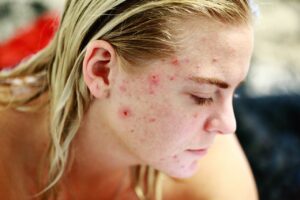
One of the most common consequences of contact with detergents is allergic reactions. Their number is constantly growing. In recent decades, allergies have increased exponentially, and today in Russia one third of people suffer from allergies (our research and practice have shown that shungite water is one of the strongest anti-allergy drugs). Every 12th person has asthma. APAs cause male infertility.
Phosphates and chlorine make up between 35% and 75% of the chemical composition of the detergent. Phosphates in powders are used to remove hard deposits from the laundry, to make the powders more efficient and to prevent the re-adhesion of the laundry dirt. Phosphates create ideal conditions for the penetration of surfactants through the skin and contribute to the increased accumulation of these substances on the washed tissues. Once in the human body, phosphates bind to calcium ions, leading to bone destruction and osteoporosis. APAV and phosphates cause cancer.
Through the sewage, surfactants and phosphates are poured into the rivers, destroying the aquatic ecosystem. They increase the greenhouse effect, reduce the ability of the oceans to absorb carbon dioxide. This leads to global climate change, and climate change to floods, drought, hurricanes, reduction of drinking water, extinction of living organisms... PAHs and phosphates seep through treatment plants and boomerang back to us with drinking water, contaminated fruit and vegetables in almost the same concentration in which we pour them down the drain.
Optical brighteners are synthetic dyes that absorb light in the ultraviolet spectrum and emit light in the blue. This makes fabrics appear whiter (without actually being cleaner). Bleach irritates the skin, mucous membranes, eyes and especially the respiratory tract, and is toxic to fish and other aquatic organisms.
Of course, the companies that produce detergents, sometimes under the pressure of legislation, sometimes to satisfy the demand for ecological products, replace as much as possible some of these substances with more harmless ones. In any case, there is no washing powder that is completely safe - both for ourselves and for nature. However, walking around in dirty clothes is also not acceptable. Therefore, for most of us, washing powder is a necessary evil that we cannot live without.
So, without much thought, we pay for cleanliness not only with money, but also with our own health!
Are laundry detergents really that indispensable? It turns out not!
"Like a great artist, nature knows how to achieve something significant with little means
Heinrich Heine
Alternative - safe washing using 100% natural ingredients -
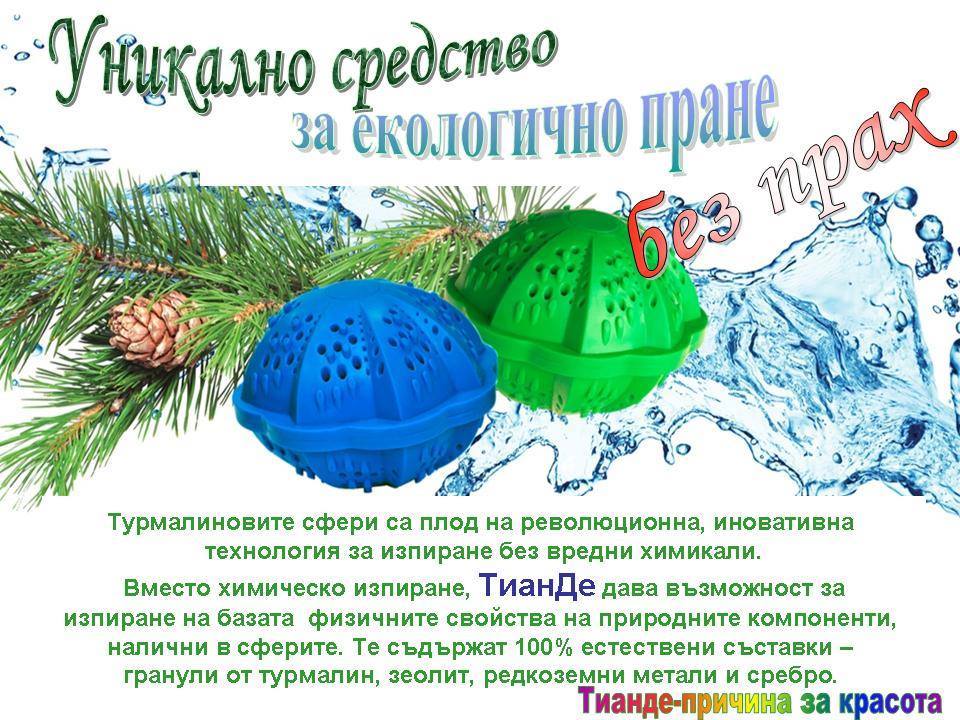
Tourmaline spheres for washing
They replace powder and fabric softeners. Super economical and completely environmentally friendly. It is a revolutionary, innovative washing technology without harmful chemicals. Instead of dry cleaning, TianDe company offers physical, ie. based on the physical properties of the natural components present in the spheres, tourmaline granules, zeolites, rare earth metals, silver. Due to the absence of aggressive chemical ingredients, the spheres are completely harmless to human health and the environment. They do not cause irritation and allergic reactions.
TOURMALINE is one of the most interesting stones with a complex and volatile chemical composition. The composition of tourmaline includes: calcium, potassium, magnesium, manganese, iron, silicon, iodine, fluorine and other ingredients - 26 microelements from the Mendeleev table.
The name tourmaline comes from the Sinhalese (Sri Lanka) word "turamali" stone with mixed colors. Other translations treat it as a "stone that attracts ash", which is related to its ability to electrify when heated. It is characterized by an extremely high negative field, high content of negative ions. It emits infrared rays. Has the ability to gently clean the environment from bacteria and microorganisms and to refresh. Gives the aroma of natural fresh mountain air.
ZEOLITES are natural minerals with incredible physical properties thanks to their special crystal structure. This structure provides him with an electrically reactive surface of over 450 sq.m. per gram. The negatively charged surface enables the zeolite to attract and retain cations from its environment and in turn release others. Placed in a water environment, zeolite eliminates all human-harmful substances from it, including radioactive pollution. In ecospheres, they are used as a softener.
COLLOIDAL SILVER has antibacterial properties. Silver is a natural antibiotic, it disinfects water by purifying it from bacteria and microorganisms. / There are about 10 million bacteria in a glass of tap water, and the same water in a silver cup becomes medicinal. And the most valuable and healing is shungite water. Silver also has antiviral, antifungal properties. If the antibiotic destroys 67 harmful bacteria, silver destroys 650 pathogenic bacteria, viruses, fungi and molds. Unlike antibiotics, silver does not destroy the positive bacteria for the flora.
After washing with the ecospheres, the laundry does not need additional rinsing, which further saves on electricity and water costs. Tourmaline spheres give superior results in the washing of various fabrics, without the participation of phosphates and surfactants. The granules in the spheres have a strong antibacterial effect, remove bad odors, give fabrics amazing softness, freshness and preserve the brightness of colors. Tourmaline spheres are suitable for both hand washing and machine washing using hot or cold water.
Thanks to the use of ecospheres, women will protect their hands from dryness, from the unpleasant burning sensation when washing powder falls on small skin wounds, and the whole family from the appearance of dermatitis, eczema, asthma, lowered immunity and even more serious health problems problems.
Advantages of the ecospheres:
SAFE for human health. They do not cause allergic reactions and other unpleasant health consequences. Suitable for washing children's clothes.
ECOLOGICAL. There are no volatile chemical substances in their composition. Tourmaline spheres are absolutely harmless, not only for human health, but also for the environment.
ECONOMICAL. They replace both washing powder and fabric softener. They have an antibacterial effect, remove unpleasant odors. They give the laundry an incredible aroma of freshness. One set of tourmaline spheres is enough for about 1200 washes or 2 years of daily use for domestic needs or public laundries.
Five most basic applications of tourmaline spheres
In order to fully manifest the unique properties of tourmaline spheres, they must be used purposefully. We offer 5 of the best specialized applications of the ecospheres:
● Safe washing of clothes. It is especially recommended for people with sensitive skin, allergies or inflammation. Use the spheres instead of washing powder or additionally rinse the linen with them. In this case, you should keep in mind that the spheres consist of natural materials that are not intended for bleaching white linen. Here you really have to choose - snow-white clothes or your health. Or maybe you just need to buy some colorful underwear.
● To store the brightness of colors.
In order to preserve or restore the original color of an already faded garment, ecospheres are best suited! If you still stick to white linen, use the ecospheres after the usual washing with washing powder.
● Effective rinsing.
Use the spheres for the main or additional rinse of the laundry after washing with the conventional powder. "During washing with ecospheres, it becomes clear how much our underwear is full of washing powder, the first reviews testify. The foam from the surfactant left in the clothes continues to form and form”. It is these "side effects" of traditional detergents that make clothes harder and paler, as a result of which they not only lose their shape, but become a source of irritation.
● Care for down and feather products.
Wash jackets and soft bedding (pillows, blankets) with the spheres. When washing with conventional powders, there are a number of problems - clumping, tangling of fluff and feathers, residues of washing powder - after rinsing, white spots and streaks remain... By washing with tourmaline spheres, you will not only avoid these inconveniences, but you will give your already worn clothes lightness and volume, like new.
● Care for dusty and fluffy items such as soft toys or plush car seat covers.
The usual washing of such items will only worsen their appearance, but after use with tourmaline spheres, they will be like new.
By purchasing a set of tourmaline spheres, you join the company's eco-program by sponsoring the planting of a coniferous tree.
Planting conifers is an effective way to restore ecological balance. They produce a large part of the oxygen on the ground and in the air, phytoncides - volatile biologically active substances that can destroy various types of bacteria.
They also provide a natural habitat for animals and birds. Wood is mainly harvested through coniferous forests, so their area has decreased catastrophically.
By caring for the health of our family members by washing with the harmless tourmaline ecospheres, we will help plant more trees on our planet, which big business is ruthlessly exploiting and destroying.
Health is in our hands.
Why should we use ecospheres and not washing powders that also use carcinogenic additives?
Tourmaline ecospheres will change your perception of laundry!
– 100% natural ingredients
– no surfactant (*surfactant)
– no chemistry
– ecospheres protect your health
– ecospheres save your money
– ecospheres take care of ecology.
Chemistry is death packed in jars and boxes. The formula of the first washing powder was invented by Fritz Henkel in 1876 based on sodium silicate and soda.
Many of the components of detergents (chlorine, sulfur dioxide, phosphates) during the First and Second World Wars were used to create chemical weapons.
The main components of washing powder are APAV and phosphates.
APAV (anionic surfactant) are the cheapest and most aggressive of the surfactants.
The more foam, the greater the concentration of APAV.
The shortest path of APAV in our organism is clothes.
APAVs are not washed out of the laundry, even after 10 rinses.
– There are no surfactants, phosphates or other synthetic substances in the composition of ecospheres. Their composition is 100% of natural components - tourmaline granules, zeolites and rare earth metals!
Actions:
These coffee cups are an ecological and innovative product, which leads to economical results, without significant financial costs. The cosmetic components in the cream are almost 100% natural and do not contain any chemical substances. They are completely safe for the environment and human health. They act as a substitute for the title and the ppaxa for the ppana. They lead to no allergic reactions or irritations. They can be used for machine and instant washing, both hot and cold water. One set of this product is enough for about 2-3 years of daily use.
Material:
All the components of the tympanic coffee are 100% natural products. The green glass container contains thermoplastic rubber, typmaline, trace metals and zeolites. The blue plastic container contains thermoplastic rubber, typmaline, copper and zeolites.
Actions:
The company offers consumers a completely new method of testing, based on the advanced components of the product and its physical properties. The traditional method of testing is chemical and includes substances such as phosphates, dioxide and chloride. In order to remove water stains, water must increase its solubility by reducing surface tension. B ppaxovete za ppane tova ce postiga pocpedctvom chemichno aktivnite substance. The Typmaline spheres of Tiande achieve the same result, thanks to weak variable electromagnetic fields. Typmalin creates electrical currents, which increase the solubility of water, reducing the force of attraction between moles. The metals contained in the field of petroleum metals increase the quality of the increase in water conductivity. Zeolites, on the other hand, have the property of absorbing salts and in this way soften the water. Washing with these spheres does not damage the tissues or change their color. Moreover, after many tests with spheres, dpexites become softer and more elastic, without the use of fabric softener.
Results from the demand for raspberry coffee:
They protect the color of the fabrics and the weight of the fabric and the fabric. They act as a feminine title;
They drink excellently without surfactants and phosphates;
They have a strong effect in disinfecting clothes. This is due to the antibacterial effect, which does not neutralize unpleasant odors.
Забeлeжĸa:
Raspberry hairs are not intended for bleaching and enhancing stains of various origin. Even if you wear white clothes, they don't have the bleaching effect.
Important rules for using the glasses:
Delicate dishes must be placed in special bags for storage;
The maximum water temperature in the morning is 60 degrees. Exceeding temperatures can damage the thermoplastic key case in which the tourmaline beads are placed;
After closing the oven, the coffee can end up in the ash tray. At least once a month, the branches must be stitched. If you sew them on the branches after each need, you will increase their longevity and effectiveness;
Ππαπάνα καφής καφήτης and πέχεις must be set in advance from 60 to 90 minutes;
When cutting large quantities of dexes (over 7 kg), two sets of knives must be used to achieve an optimal result;
When burning in an automatic incinerator, the coffee must be placed on the floor between the mandrels. Follow the cleaning instructions printed on the container labels. Take the coffee out of the ash tray after rinsing and centrifugation;
Coffee should not be used when the washing machine is set to the economical water consumption program;
If the ashtray is not full of dpex, the coffee can be fired. It is recommended to use only a full burner and the lowest setting of the centrifugation.
*Surfactants (surfactants)
How to mix immiscible substances, for example, water and oil? To join the unjoinable, a mediator is needed. It is not necessary for him to penetrate deeply into the mass of both the one and the other substance. It is sufficient to distribute it evenly, albeit in a monomolecular layer, on the contact surface. Such mediating substances capable of accumulating on the interfacial contact surface of the two bodies are called surface-active.
(surfactants) are chemical compounds that, by concentrating on the surface of the boundary between thermodynamic phases, cause a decrease in surface tension. They are a large and heterogeneous category of chemical compounds (usually of organic origin) whose molecules contain groups with different structures and opposite propensities for solubility in water. They are soluble in both organic solvents and water.
Dissolved in a liquid, these substances are adsorbed at the interface between the liquid and a phase in contact with them (air, another liquid, a solid), reduce the surface tension and change the properties of the phase, i.e. exhibit surface activity.
Surfactants have washing, foaming, wetting, dispersing and emulsifying properties. They are widely used in the production of washing preparations (detergents), softeners, paints, adhesives, inks, lubricants, bleaching agents, agricultural chemicals (herbicides, insecticides), disinfectants, hair conditioners, fire extinguisher spray and others.
Some of the surfactants are known to be toxic to ecosystems, animals and humans and promote the dissipation of other environmental pollutants. However, such substances are continuously deposited in soil and water bodies in many different ways, either purposefully or with the waste products of production and household activities. An example of the result of the use of detergents in the household and their reaching through the sewage system to water bodies is eutrophication and the disturbance of the balance in water ecosystems.
Laundry is the most popular example of using surfactants.
According to the testimony of the ancient Roman writer Pliny the Elder, as early as the 70s of the 1st century AD. were able to prepare soap from goat fat under the influence of beech ash. Much later, people began to obtain detergents (they are surfactants) through the action of sulfuric acid on natural oils. The French chemist E. Fremy was the first to prepare such preparations in 1831 from olive and almond oil. At the end of the 19th century, the Russian chemist G.S. Petrov, acting with sulfuric acid on products from the processing of oil, obtained surface-active substances alkylsulfonates, which are still widely used today. Finally, in the middle of the 20th century, organic substances with the general formula were added to the list of the main surfactants:
SnN2 n + 1, -S6 N4-O (-SN2 SN2 O-) h -SN2 SN2 ON.


